
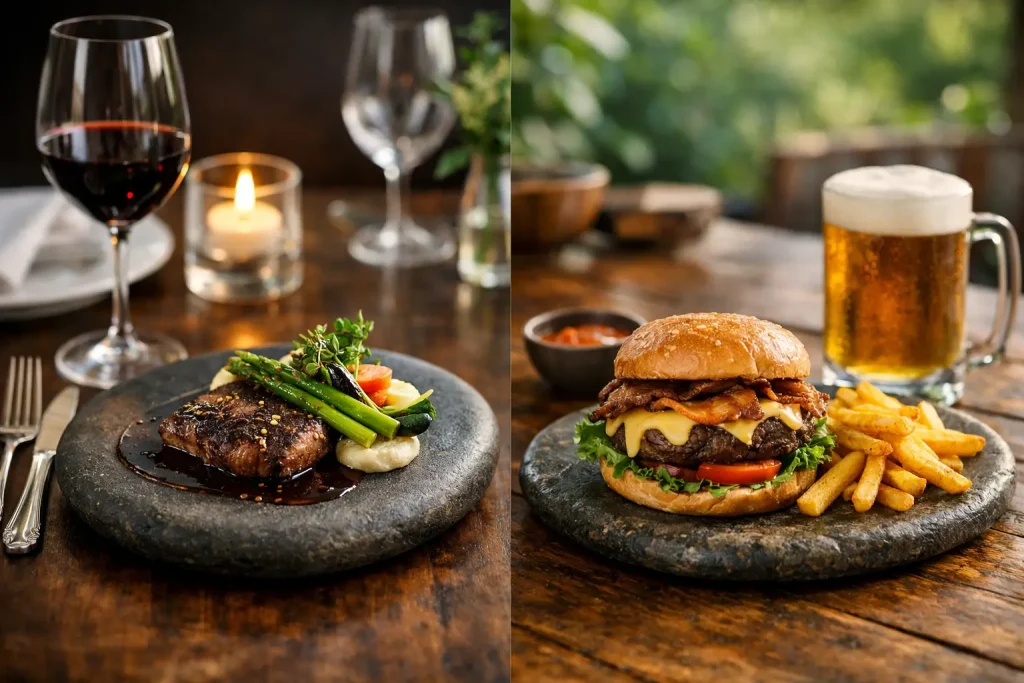
A meal can be a quick answer to hunger, or it can become the part of the evening everyone remembers. That is the real distinction in fine dining versus casual dining: not simply white tablecloths or the number on the check, but the level of intention behind the food, service, setting, and time spent together.
Both formats have a place in a well-lived dining life. Casual dining can be exactly right after a busy workday, before an event, or when the pleasure lies in ease and familiarity. Fine dining asks for a little more time and attention in return for a more layered experience. Knowing what each offers makes choosing the right table feel less like a rulebook and more like good hospitality.
Fine Dining Versus Casual Dining: The Essential Difference
Casual dining is designed around comfort, accessibility, and flexibility. The room is often lively, the menu familiar and broad, and the service paced to accommodate diners who may be joining for a fast lunch, a family meal, or a relaxed night out. Guests can generally arrive with fewer expectations around dress, timing, or the structure of the meal.
Fine dining is built around craft and progression. A chef-driven menu often has a tighter point of view, giving each course a purpose within the meal. Ingredients may be sourced for a particular season, prepared through techniques that require more time, and presented with careful attention to texture, color, temperature, and aroma. Service is not meant to interrupt the table. It is meant to guide the experience with knowledge and discretion.
The difference is not that one is inherently better. It is that each serves a different kind of occasion. A casual meal can be joyful and deeply satisfying. A fine dining meal can turn dinner into an experience with a sense of place, story, and ceremony.
The Pace Changes Everything
The most noticeable difference between these dining styles is often pace. Casual dining tends to move efficiently. Guests may order soon after sitting down, receive their food in a shorter window, and finish the meal in time for the next part of their day.
Fine dining is intentionally slower. That does not mean waiting without care. It means allowing room for a welcome, a considered drink, conversation, and courses that arrive when they are at their best. A composed appetizer, for example, may bring a bright acidic note before a richer entrée. Dessert can offer contrast, warmth, or a final touch of spice rather than merely a sweet ending.
This slower rhythm matters because many dishes cannot be rushed without losing their character. A sauce that has been reduced for depth, a protein rested for tenderness, or a dessert finished to order requires timing behind the scenes. The guest experiences the result as ease, even though it reflects a great deal of preparation.
For diners planning a fine dining evening, it helps to treat the reservation as the beginning of the occasion rather than a deadline. Allow time to settle in, ask questions, and enjoy the table. If you have theater tickets, a tight travel schedule, or young children who need a quicker meal, casual dining may be the more practical choice that day.
Food With a Point of View
In casual dining, menus often prioritize consistency and range. There may be something for nearly everyone, from familiar appetizers to crowd-pleasing entrées. That variety is valuable, especially for groups with different tastes or a spontaneous appetite.
Fine dining typically puts more emphasis on a culinary point of view. The menu may be smaller because each dish has been developed with a specific balance in mind. Instead of offering every possible option, the kitchen makes a clear statement about flavor, tradition, and technique.
At an upscale Latin fusion table, that point of view can be especially expressive. A dish may begin with the warmth of Honduran comfort food, draw brightness from Peruvian peppers or citrus, and use Mexican masa, Spanish seafood traditions, or ingredients found across Latin America. The goal is not to blur those identities. It is to honor them through thoughtful combinations that let the ingredients speak clearly.
Consider what happens when a chef works with plantains. In a casual setting, plantains might arrive as a simple side. In a more elevated preparation, their natural sweetness can be balanced with a savory braise, a crisp element, fresh herbs, or a sauce with chile and acidity. The ingredient remains approachable, but it gains new dimension. That is the pleasure of chef-led dining: a familiar flavor can carry memory while still offering discovery.
Service Is More Than Taking an Order
Casual dining service is often friendly, direct, and efficient. It keeps the meal moving and gives guests what they need without making the experience feel formal. For many occasions, that is exactly right.
Fine dining service adds another layer of care. A knowledgeable server can explain an unfamiliar ingredient, describe how a dish is prepared, and help guests select courses that suit their preferences. This is especially meaningful with regional Latin cuisines, where a name on the menu may carry a cultural story that deserves more than a quick definition.
Thoughtful service also supports guests with dietary needs. Gluten-free and celiac-conscious diners should never have to guess whether their meal has been handled with care. A polished dining experience includes a clear conversation about allergens, modifications when possible, and honest guidance when a dish cannot be safely adapted. The goal is confidence, not pressure.
At Catrachos Latin Cuisine, that guest-first approach is part of the dining experience. Asking about a dish, an ingredient, or the day’s chef special is encouraged. A well-informed conversation can lead to a meal that feels personal, whether you are curious about a traditional preparation or looking for options that fit your dietary needs.
Atmosphere Sets the Emotional Temperature
A casual dining room often invites spontaneity. It can be energetic, easygoing, and suited to dropping in with friends. The visual details support comfort, but they are not always central to the meal.
Fine dining uses atmosphere as part of the composition. Lighting, music, table settings, glassware, and the spacing between tables can all shape how a meal feels. The room should be polished without becoming cold. The best version of upscale dining makes guests feel cared for, not judged.
That balance is particularly important for diners who may love excellent food but dislike unnecessary formality. Fine dining does not require stiff behavior or a rehearsed understanding of etiquette. Curiosity, respect for the room, and a willingness to enjoy the pace are enough. You do not need to know every ingredient before you arrive. In fact, discovering something new is often the reason to come.
Price Reflects the Full Experience
Fine dining usually costs more, and the reason is broader than portion size. The price can reflect higher-quality ingredients, skilled culinary labor, made-to-order preparation, carefully trained service, a more deliberate setting, and the time devoted to each plate. Seasonal menus may also change as ingredients become available or reach their peak.
That does not mean every dinner needs to be a special-occasion splurge. Casual dining remains a smart, satisfying choice when value, speed, and flexibility are the priority. The useful question is not, “Which is worth it?” but “What kind of experience do I want from this meal?”
For an anniversary, a visitor’s first night in Rapid City, a long-awaited dinner with friends, or an evening when you want to taste something beyond the expected, fine dining can be worth planning for. For a simple weekday meal or an informal gathering, casual dining may better fit the moment and the budget.
How to Choose the Right Table
Choose casual dining when convenience is part of the pleasure. It suits a shorter window, a low-key gathering, a broad range of appetites, or the desire to keep plans open. There is no lesser joy in a meal that meets you where you are.
Choose fine dining when you want food to be the event. It is well suited to celebrations, date nights, visiting family, culinary curiosity, and any meal where conversation deserves to unfold without being hurried. Make a reservation when possible, share dietary needs before ordering, and let the team know if you are working around a time-sensitive plan.
The best dining choice is the one that matches your evening. Some nights call for familiar comfort. Others call for a table where every course carries a little more story, and where the final bite gives you one more reason to linger.