
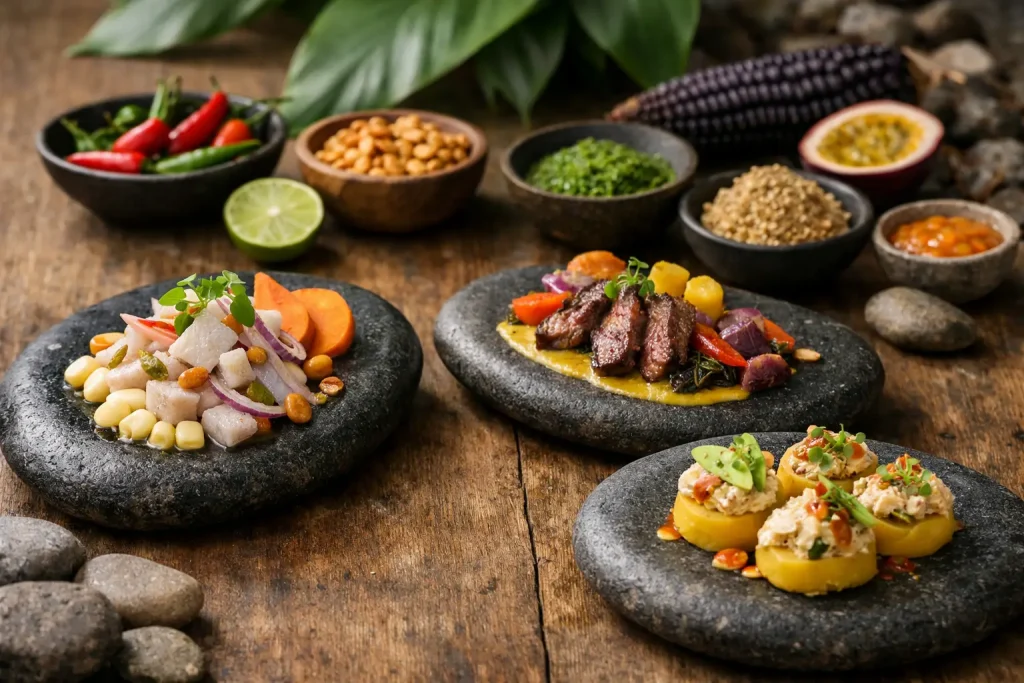
Peruvian food rarely asks for your attention quietly. A single plate can carry the clean acidity of lime, the deep warmth of chile, the earthiness of potatoes, and the savory depth of a long-simmered sauce. Learning how to explore Peruvian flavors is less about ordering the most unfamiliar item on a menu and more about noticing how these elements speak to one another.
For diners who enjoy food with a sense of place, Peru offers extraordinary range. Its cooking has been shaped by the Pacific coast, the Andes, the Amazon, and generations of Indigenous, Spanish, African, Chinese, and Japanese influence. The result is cuisine that can be bright and delicate one moment, slow-cooked and comforting the next. Give it time, ask questions, and let contrast guide the meal.
Start With the Flavor Map of Peru
Before focusing on a specific dish, it helps to understand a few of the ingredients that give Peruvian cuisine its distinct character. Peru is not defined by one chile, one starch, or one style of cooking. Its flavors shift by region, season, and chef, but several foundations appear again and again.
Ají amarillo is one of the most recognizable. This sunny yellow chile brings a rounded heat that is often fruity rather than aggressive. It may appear in a creamy sauce, a marinade, or a stew, lending color and a gentle warmth that builds slowly on the palate. Ají panca is darker and more restrained, with smoky, berry-like notes that suit grilled meats and braises.
Then there is the potato. Peru is home to thousands of potato varieties, and that diversity is reflected in its cuisine. Potatoes may be buttery, firm, purple, golden, floury, or almost nutty in flavor. They are not merely a side dish. They can carry a sauce, soften the heat of a chile, or give a dish its comforting center.
Corn deserves the same attention. Peruvian corn can be dramatically large-kernelled, toasted until crisp, ground into dough, or served tender alongside richer foods. Its sweetness and texture often create balance against citrus, spice, and savory sauces.
These ingredients are an invitation to taste actively. Notice whether the chile arrives first or lingers at the finish. Ask whether the potato is adding richness or contrast. Small observations make a meal more memorable.
Begin With Bright, Coastal Dishes
Ceviche is often the natural starting point for guests new to Peruvian cuisine, but it deserves more than a quick description as fish with lime. At its best, ceviche is a study in freshness, timing, and balance. Seafood is dressed with citrus, aromatics, chile, and salt until the flavors feel alive rather than heavy.
The liquid surrounding the seafood is often called leche de tigre, or tiger’s milk. It is not milk at all, but a vivid blend of citrus juices, fish juices, chile, herbs, and seasoning. Depending on the preparation, it can be sharp, cooling, lightly spicy, and deeply savory. Served alongside sweet potato and corn, ceviche becomes a complete conversation between acid, heat, sweetness, and texture.
Ceviche is best approached with a practical note in mind: raw or lightly cured seafood may not be right for every guest. Dietary needs, pregnancy, allergies, and individual comfort all matter. A thoughtful restaurant should be able to explain preparation methods and guide guests toward another dish when needed.
If seafood is not your preference, look for dishes that use a similar Peruvian instinct for contrast. A bright citrus element with grilled meat, a fresh herb sauce beside a rich entrée, or pickled vegetables alongside a warm braise can offer the same sense of lift.
Let Acidity Do More Than Add Sourness
Peruvian citrus is not used simply to make food taste tart. It wakes up richness, sharpens seafood, and helps chile flavors feel more precise. When you taste a dish with lime, consider what it is balancing. Is it cutting through creaminess? Bringing life to a starch? Making the char on grilled ingredients feel more pronounced?
That question can change the way you experience the plate. Acidity is often the thread that keeps bold flavors from becoming overwhelming.
Move Toward Comforting Sauces and Slow-Cooked Depth
After a bright opening, explore the gentler, more soulful side of Peruvian cooking. One of the most welcoming places to begin is ají de gallina, a creamy chicken dish traditionally enriched with ají amarillo, bread, milk, nuts, and sometimes cheese. The exact recipe varies widely, as it should. What matters is the harmony: savory chicken, a softly spicy sauce, and the grounding presence of potatoes or rice.
This is where many diners recognize that Peruvian heat is not always about intensity. Chile can be aromatic, fruity, and warming. It can deepen a sauce without making the meal feel punishing. If you are sensitive to spice, ask how the chile presents itself in a particular preparation. Mild, medium, and hot are useful starting points, but flavor matters more than a number on a heat scale.
Another classic direction is lomo saltado, a dish that reveals Peru’s Chinese culinary influence. It brings together stir-fried beef, onions, tomatoes, soy sauce, and often fries, creating a plate that feels both familiar and unmistakably Peruvian. The savory, high-heat character of the stir-fry meets the comfort of potatoes, while tomato and onion provide brightness.
It is also a reminder that authenticity is not frozen in time. Peruvian cuisine has always been shaped by movement, adaptation, and exchange. A chef-led Latin restaurant can honor those traditions while presenting them through its own point of view, with careful sourcing, seasonal adjustments, and refined technique.
How to Explore Peruvian Flavors Through Texture
Flavor is only half the experience. Texture is essential to the way Peruvian dishes are composed. A plate may pair tender meat with crisp cancha, the toasted corn that adds a nutty crunch. Smooth sauces may meet firm potatoes. Creamy fillings may be wrapped in a delicate dough or balanced with a crisp salad.
When ordering, avoid choosing every dish from the same textural family. If the table begins with something cool and silky, follow with an entrée that offers char, crunch, or slow-cooked tenderness. If a rich sauce anchors the meal, a fresh herb-forward side or citrusy appetizer can keep the progression lively.
This is especially useful when sharing. Rather than ordering several heavy dishes, build contrast across the table: one bright starter, one comforting dish, one grilled or stir-fried entrée, and perhaps a dessert that brings fruit, spice, or gentle sweetness. The right mix lets each plate show its own character.
Pair the Meal With Care
A beverage can either flatten a dish or make its details more vivid. With ceviche and other citrus-forward plates, choose something crisp and refreshing. With chile-based sauces or slow-cooked meats, a beverage with fruit, moderate body, or a touch of sweetness can soften the spice without hiding it.
The best pairing depends on the dish and on the diner. Some guests prefer wine, while others may enjoy a cocktail built around bright citrus, herbs, or tropical fruit. Nonalcoholic options deserve the same consideration. Sparkling water with lime, a tart fruit drink, or a fresh herbal beverage can provide the reset needed between bites.
At Catrachos Latin Cuisine, the pleasure of a Peruvian-inspired meal is not meant to be rushed. Allow time for the table to settle, for sauces to be noticed, and for the conversation around a dish to become part of the experience. If you have food allergies, gluten concerns, or celiac needs, mention them when making a reservation and again with your server. Ingredients and preparation can change with seasonal menus, and clear communication helps the kitchen guide you thoughtfully.
Ask the Questions That Lead to a Better Meal
There is no need to arrive knowing every ingredient. Curiosity is the right approach. Ask what gives a sauce its color, whether a dish leans citrusy or smoky, or how much heat to expect. Ask which plate best represents the chef’s current inspiration.
These questions are not a test of culinary knowledge. They are part of hospitality. A good recommendation can help a first-time guest find an approachable introduction, while an adventurous diner may be directed toward deeper chile flavors, seafood, or a seasonal special.
Peruvian cuisine rewards a slower kind of attention. Take the first bite, then another. Let the lime fade into chile, the chile meet potato, and the savory elements linger. The most satisfying way to explore these flavors is to stay present long enough to hear the whole story on the plate.