
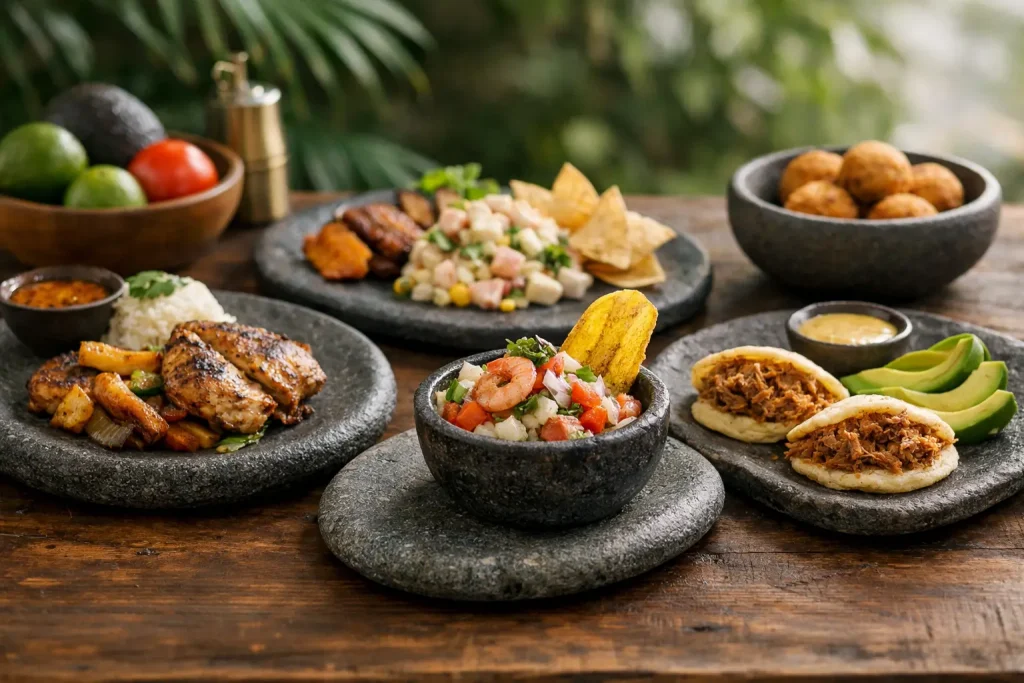
A plate can look naturally gluten-free and still carry a hidden question: Was the sauce thickened with flour? Did the corn tortilla share a grill with a flour tortilla? For guests asking what dishes are gluten free, the best answer begins with both flavor and preparation. Latin cuisine offers an abundance of naturally gluten-free ingredients, but a thoughtful conversation with your server makes all the difference.
At its heart, Latin cooking is built around ingredients that need no imitation: corn, rice, beans, plantains, yuca, fresh seafood, chiles, herbs, citrus, and carefully prepared meats. These are generous, deeply rooted flavors that can make gluten-free dining feel like a celebration rather than a compromise.
What Dishes Are Gluten Free in Latin Cuisine?
Many Latin American dishes begin with gluten-free foundations, especially when they are prepared from scratch. Grilled meats with herbs, citrus, garlic, and chiles are often a strong starting point, as are rice-based plates, bean dishes, vegetable preparations, and seafood finished with bright, fresh ingredients.
Still, “often” is not the same as “always.” A chef may use a seasoning blend, marinade, stock, garnish, or finishing sauce that contains gluten. The recipe matters, and so does the kitchen’s handling of the dish. This is especially true for guests with celiac disease or a severe gluten sensitivity, for whom cross-contact can be as important as the ingredient list itself.
The most satisfying approach is to ask about a dish you genuinely want to enjoy, then let the kitchen guide you toward the best preparation. A chef-driven restaurant can often explain the details behind a sauce or adjust an element when possible, but those accommodations depend on the recipe, the service, and the need to protect the integrity of the dish.
Corn tortillas and masa-based dishes
Corn is one of the great gifts of Latin gastronomy. Traditional corn tortillas, masa cakes, tamales, pupusas, arepas, and many tortilla chips can be gluten-free because they are made with corn rather than wheat. The key word is can.
Some prepared corn products include flour or other additives, and chips may be fried in oil shared with breaded items. Tamales may have a corn masa base but be served with a sauce or filling that requires a closer look. When ordering, ask whether the item is made from 100 percent corn masa and whether it can be kept away from flour-based foods during preparation.
For many diners, a warm corn tortilla is a simple pleasure. For a celiac-conscious guest, it is also a question worth asking with care.
Rice, beans, plantains, and yuca
Rice and beans are among the most dependable gluten-free staples on a Latin-inspired menu. They are humble ingredients with remarkable range: rice can carry the perfume of saffron, tomato, garlic, or herbs, while beans bring earthy depth, creaminess, and comfort. Their natural gluten-free status does not change, but seasonings, broths, and shared serving utensils can affect the finished dish.
Plantains and yuca are equally welcoming options. Sweet plantains may be caramelized at the edges and soft at the center; green plantains can become crisp tostones or savory chips. Yuca may be fried, mashed, or transformed into a tender, satisfying side. These ingredients are naturally gluten-free, though any batter, sauce, fryer, or topping should be confirmed.
If you are choosing between several sides, rice, beans, plantains, and yuca are excellent places to begin the conversation with your server.
Fresh seafood and ceviche
Ceviche is one of Latin America’s most luminous expressions of seafood. Fresh fish or shellfish is often cured in citrus and accented with red onion, cilantro, chiles, fruit, or sweet potato. In its most traditional form, ceviche is naturally gluten-free and wonderfully suited to a diner seeking vivid flavor without wheat-based ingredients.
Yet ceviche is not a blanket guarantee. The accompanying chips, crunchy garnish, bottled sauces, or marinades may change the equation. Soy sauce, for example, commonly contains wheat, and a chef may use it in a modern fusion preparation for savory depth. Ask about every component, including what arrives underneath, alongside, or on top of the seafood.
The same thinking applies to grilled fish, shrimp, and scallops. Their clean flavor makes them natural candidates for gluten-free preparation, provided the marinade, sauce, and cooking surface are safe for your needs.
Sauces Are Where the Details Matter
A sauce can be the soul of a plate. It can also be the part that deserves the most specific question. Latin kitchens create extraordinary sauces from roasted chiles, tomatillos, tomatoes, nuts, seeds, herbs, chocolate, fruit, and slow-simmered aromatics. Many are gluten-free by nature, but some may be thickened with flour, enriched with a wheat-containing ingredient, or prepared with a stock or condiment that includes gluten.
Mole deserves particular care. Its complexity is part of its beauty, and recipes vary dramatically from one kitchen to another. Some moles are gluten-free; others may contain bread, crackers, flour, or ingredients produced with gluten. No two recipes should be assumed to be the same.
Creamy sauces, marinades, and reductions also merit a quick check. A question as direct as “Is this sauce gluten-free, and can it be prepared without cross-contact?” gives the kitchen the information it needs to respond responsibly.
Gluten-Free Choices That Need Extra Attention
A few menu categories are more likely to contain wheat or encounter cross-contact. They are not off-limits by definition, but they require clarity before ordering.
- Flour tortillas, wheat-based wraps, empanada dough, pastries, churros, and many dessert crusts contain gluten unless specifically made otherwise.
- Fried foods can be risky when the fryer is shared with breaded items, flour tortillas, or other gluten-containing foods.
- Croquettes, fritters, breaded proteins, and stuffed items may use flour or breadcrumbs for structure.
- Spice blends, bouillon, soy sauce, and premade condiments can contain gluten even when the main ingredient is naturally gluten-free.
This is not meant to make dining feel restrictive. It simply recognizes that a memorable meal is built on trust as much as taste. The more precise your question, the more confidently the culinary team can help.
How to Order With Confidence
When making a reservation or arriving for dinner, mention celiac disease or a gluten allergy early. “Gluten-free” can mean different things to different guests, so sharing the level of sensitivity helps the staff communicate the right precautions to the kitchen.
At the table, choose the dish that appeals to you first rather than asking only for a generic gluten-free option. You might say, “I am interested in the grilled fish with plantains. Can you tell me whether the marinade, sauce, and cooking surface are safe for someone with celiac disease?” This gives the server a clear path to an accurate answer.
Be prepared for an honest response that a favorite dish cannot be safely modified. That is not a failure of hospitality. It is a kitchen protecting your well-being rather than making a promise it cannot keep. In a restaurant that values craft, the best alternatives should still feel intentional, generous, and full of character.
A Gluten-Free Meal Should Still Feel Special
At Catrachos Latin Cuisine, the pleasure of the table begins with ingredients that carry history: the warmth of corn, the brightness of lime, the deep savor of slow-cooked beans, and the quiet heat of a well-chosen chile. Gluten-free guests deserve access to that experience with the same sense of occasion as every other diner.
Seasonal menus and chef specials can change, which is one reason a conversation with the team matters more than a fixed online assumption. A dish that is naturally gluten-free one evening may be paired with a new sauce, garnish, or accompaniment another evening. Freshness and creativity are part of the experience, and clear communication helps preserve both safety and pleasure.
The next time you wonder what dishes are gluten free, start with the ingredients that have always belonged to Latin tables – corn, rice, beans, plantains, yuca, seafood, and vibrant produce – then ask the few thoughtful questions that let the kitchen welcome you with confidence.