
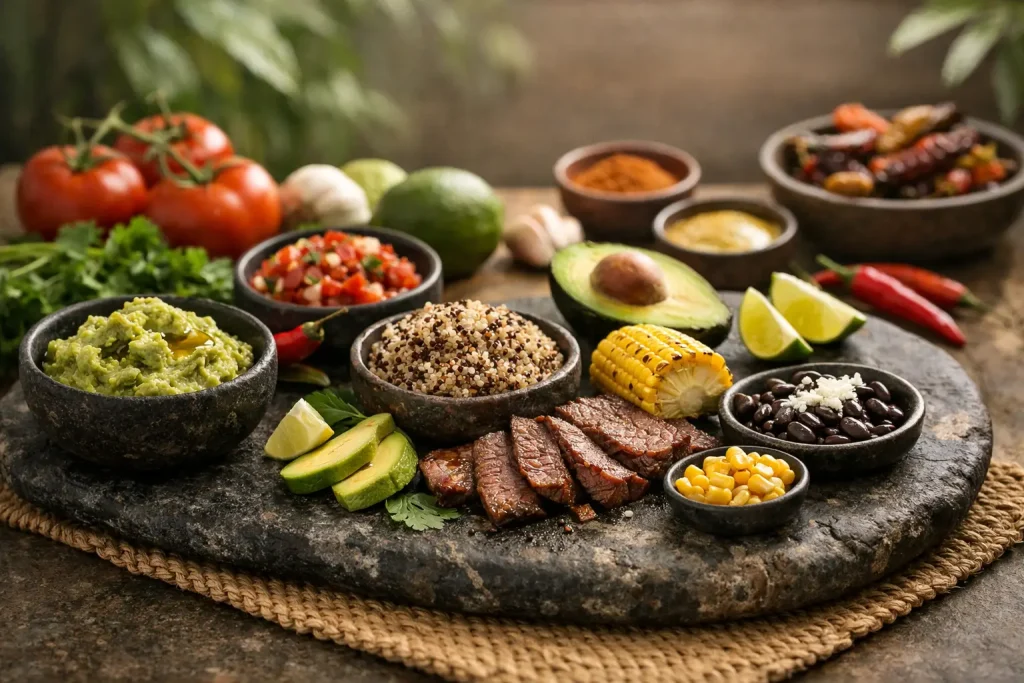
A warm corn tortilla fresh from the comal, a spoonful of silky black beans, a bright squeeze of lime, and the deep fragrance of slow-cooked sofrito can all belong at the same table. So, what ingredients define Latin cuisine? The honest answer begins with a distinction: Latin cuisine is not one single pantry or one fixed flavor profile. It is a living collection of culinary traditions shaped by Indigenous ingredients, African influence, European techniques, migration, climate, and the particular character of each country and region.
From Honduras and Mexico to Peru, Spain, the Caribbean, Central America, and South America, the ingredients change with the landscape. Yet a handful of foundational foods appear again and again, prepared in ways that carry history, comfort, and celebration.
What Ingredients Define Latin Cuisine Across Regions?
The defining ingredients of Latin cuisine are often humble at first glance: corn, beans, rice, chiles, root vegetables, herbs, citrus, and carefully built sauces. Their power comes from how they are treated. A tortilla is more than a flatbread when corn has been nixtamalized, ground, and pressed by hand. Beans become deeply satisfying when simmered with aromatics and time. A chile may bring heat, but it can also offer smoke, sweetness, fruitiness, or an earthy finish.
This is why broad labels can be misleading. Mexican mole and Peruvian ají sauce both may use chiles, but they speak entirely different culinary languages. A Honduran plate may center yuca, plantains, beans, and crema, while a Spanish-influenced preparation may lean into olive oil, garlic, saffron, and paprika. The shared thread is not sameness. It is a respect for ingredients with a strong sense of place.
Corn: The Foundation With Deep Roots
Corn, or maíz, is one of the most important ingredients in Latin American cooking. Its role reaches far beyond a side dish. It becomes tortillas, tamales, pupusas, arepas, tostadas, atoles, and countless regional specialties. Its texture can be soft and tender, crisp and toasted, or transformed into a rich, earthy dough.
Traditional corn preparation matters. In many Mexican and Central American traditions, corn is treated through nixtamalization, a process that cooks and soaks dried corn with an alkaline solution. The result is more flavorful, more workable masa with a distinctive aroma and character. It is a beautiful example of technique and ingredient being inseparable.
Corn also has emotional weight. For many families, the scent of masa cooking signals a weekend gathering, a holiday, or a meal made with care. In an elevated dining setting, it can be presented with refinement, but its roots should still feel recognizable and respected.
Beans, Rice, and the Comfort of the Everyday Table
Beans are a cornerstone of daily cooking across Latin America. Black beans, red beans, pinto beans, and creamy white beans appear in soups, fillings, stews, rice dishes, and sides. Their flavor is often built with onion, garlic, herbs, peppers, and rendered fat or olive oil, depending on the region and recipe.
Rice is equally adaptable. It may be fluffy and lightly seasoned, cooked with tomato and broth, folded with beans, or paired with braised meats and seafood. Together, beans and rice create more than a satisfying plate. They reflect a tradition of making nourishing, generous food from ingredients that are accessible, adaptable, and full of possibility.
For guests with dietary needs, these staples deserve a little attention. Beans and rice can be naturally gluten-free, but preparation matters. Broths, seasonings, shared fryers, and sauces can change the final answer. A thoughtful restaurant should always welcome questions about ingredients and preparation, especially for celiac-conscious diners.
Chiles Bring More Than Heat
Chiles are among the most misunderstood ingredients in Latin cuisine. They are often reduced to a test of spice tolerance, when their real contribution is much more layered. Fresh chiles can taste grassy, bright, vegetal, or sharp. Dried chiles may bring notes of raisin, cocoa, tobacco, berry, or smoke.
Consider the difference between a fresh jalapeño, a smoky chipotle, a dark ancho, and a fragrant guajillo. Each has its own place in sauces, marinades, salsas, and braises. In Peru, ají amarillo offers a sunny color and rounded, fruity warmth that defines many beloved dishes. Across Latin kitchens, chiles are used to create balance, not simply intensity.
That balance is personal. Some guests want a lively edge of heat; others want the chile flavor without the fire. Good hospitality makes room for both, while preserving the chef’s intention whenever possible.
Aromatics and Herbs Build the First Layer
Garlic, onion, cilantro, oregano, cumin, and bay leaf form the aromatic base of many dishes, though their proportions vary widely. Sofrito, for example, takes different forms from one country to another, often combining onion, garlic, peppers, herbs, and tomato into a fragrant starting point for rice, beans, soups, and braises.
Cilantro brings freshness, but it is not the only herb at the table. Mexican oregano has a more citrusy, earthy profile than Mediterranean oregano. Epazote adds a distinctive herbal note to beans and corn-based dishes. Huacatay, sometimes called Peruvian black mint, lends a deep, green, slightly anise-like character to sauces. These ingredients are small in quantity but significant in identity.
Citrus, Tropical Fruit, and Bright Acidity
Lime is one of the great finishing touches in Latin cooking. It wakes up grilled meat, cuts through richness, lifts a seafood dish, and gives a salsa its clean spark. Citrus also plays a central role in marinades and ceviche-style preparations, where acidity interacts with delicate seafood and fresh aromatics.
Tropical fruit adds another dimension. Plantains can be savory, crisp, sweet, or caramelized depending on their ripeness. Mango, pineapple, guava, coconut, tamarind, passion fruit, and avocado each bring their own texture and contrast. They may appear in sauces, beverages, desserts, or beside roasted meats and seafood.
Acidity is essential because many Latin dishes are built on satisfying richness: slow-cooked meats, creamy sauces, fried elements, cheeses, and starches. A squeeze of lime, a tart salsa, or pickled onion keeps the plate in motion. It makes the next bite feel as exciting as the first.
Yuca, Plantains, Potatoes, and Other Essential Staples
The Latin American pantry extends well beyond corn and rice. Yuca, also called cassava, can be boiled, mashed, fried, or turned into crisp chips. Its mild flavor and dense texture make it a natural companion to sauces, meats, and seafood. In Honduran cooking, yuca is particularly beloved and often appears in dishes that feel both celebratory and deeply familiar.
Plantains offer an entirely different kind of versatility. Green plantains are starchy and savory, ideal for tostones or other crisp preparations. Ripe plantains become soft and sweet, adding a caramelized counterpoint to salty, spicy, or smoky foods.
Potatoes are especially vital in Andean cuisine. Peru alone is home to an extraordinary diversity of potato varieties, each suited to particular textures and preparations. Their presence is a reminder that Latin cuisine cannot be defined only by the ingredients most familiar in the United States. The deeper story is one of agricultural abundance and regional knowledge.
Sauces Tell the Story of the Kitchen
A sauce can reveal a great deal about a Latin dish. It may be a fresh salsa of tomato, chile, onion, and cilantro; a creamy ají-based accompaniment; a slow-simmered mole; a bright chimichurri; or a reduction built from roasted vegetables and stock. Sauces carry heat, acidity, color, and aroma while connecting individual ingredients into a complete experience.
At Catrachos Latin Cuisine, this is where tradition and chef-driven creativity can meet with intention. A classic ingredient does not need to be treated predictably. Corn, chile, yuca, citrus, and herbs can honor their origins while taking on a new expression through seasonality, precise technique, and thoughtful presentation.
The Ingredient That Cannot Be Purchased: Time
Many of the most memorable Latin flavors are not produced quickly. Beans need time to soften and absorb seasoning. Meats become tender through low, patient cooking. Chiles may be toasted before blending. Stocks, sauces, pickles, and marinades develop dimension over hours or days.
That patience is part of the cuisine’s generosity. It is also why a chef-led meal feels different from food designed to be rushed. The goal is not complication for its own sake. It is to let an ingredient become fully itself.
The next time a plate arrives fragrant with roasted chile, bright citrus, warm corn, or slow-cooked beans, take a moment before the first bite. Ask what the ingredient is saying, where it comes from, and how it was transformed. That curiosity is one of the finest ways to experience Latin cuisine.