
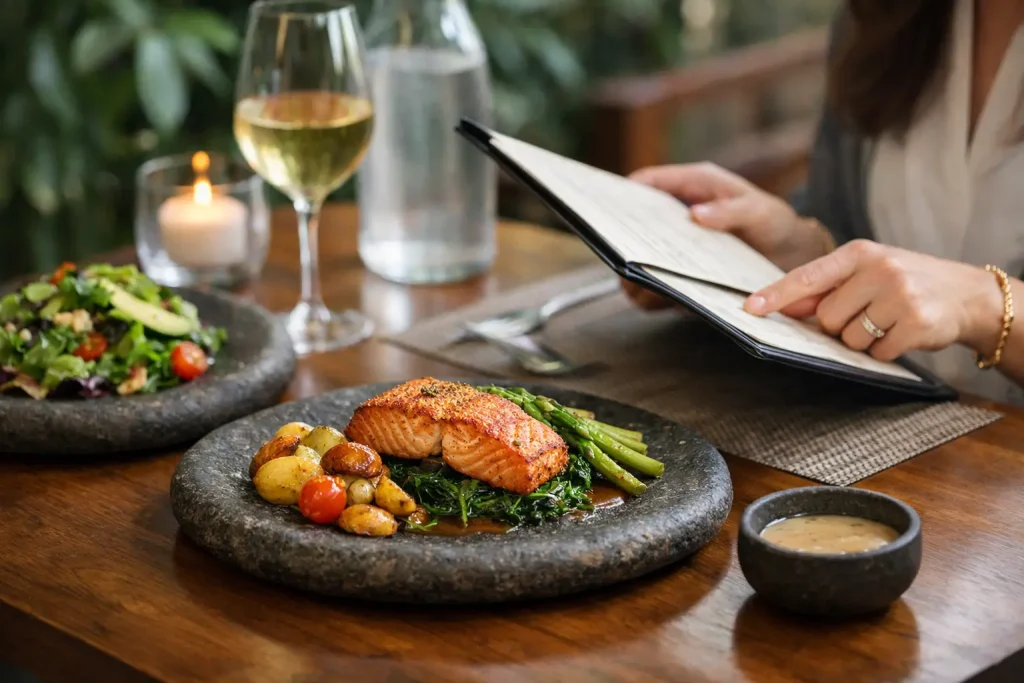
The moment a server arrives at the table is not when most gluten-free guests start thinking about safety. It usually begins earlier – while scanning the menu, weighing the risk, and wondering whether a beautiful meal will end with comfort or consequence. That is exactly why knowing how to order gluten free matters. A good restaurant experience should feel welcoming, not like a test of how well you can decode hidden ingredients.
Dining gluten free is rarely just about skipping bread. In a thoughtful kitchen, it means understanding sauces, marinades, shared fryers, flour in finishing steps, and the quiet details that can change a dish. For some guests, gluten free is a preference. For others, especially those with celiac disease, it is a health necessity. The best results come from treating that conversation with clarity, respect, and a little preparation.
How to order gluten free with confidence
The most effective way to order gluten free is to be direct, specific, and calm. You do not need to apologize for asking questions, and you do not need to turn the table into a medical seminar. A simple, clear explanation gives the restaurant what it needs to guide you well.
Start by letting your server know early. Waiting until the dish arrives to ask whether a sauce contains flour puts everyone in a difficult position. If gluten is a serious medical concern, say that plainly. “I need to eat gluten free, and cross-contact is a concern for me” gives far more useful information than “I’m trying to avoid gluten.” Those two statements can require very different levels of kitchen care.
It also helps to ask about the structure of the dish, not just the headline name on the menu. A menu description may mention grilled steak, roasted vegetables, and herb butter, but not the soy-based glaze, thickened reduction, or garnish that changes the answer. In chef-driven restaurants, dishes are often layered, and those layers are where hidden gluten tends to appear.
What to ask before you order
A graceful gluten-free order usually comes down to a few smart questions. Rather than asking, “What can I eat?” ask about one or two dishes that already sound close to your needs. That gives the server and kitchen a better place to start.
You might ask whether a sauce is thickened with flour, whether a marinade contains soy sauce, whether the fryer is shared, or whether tortillas are warmed on the same surface as flour-based items. These are practical questions, and in a restaurant that cooks with care, they are familiar ones.
This is especially important in Latin and Latin fusion cuisine, where naturally gluten-free ingredients are often abundant, but preparation methods still matter. Corn, rice, beans, yuca, plantains, fresh herbs, citrus, chiles, and grilled meats can all fit beautifully into a gluten-free meal. Yet a dish can shift quickly if it includes breaded elements, flour tortillas, beer in a braise, or a sauce finished with roux.
A ceviche, for example, may seem straightforward – bright citrus, fresh fish, onion, herbs, maybe avocado or sweet potato. Often it is. But what accompanies it matters. Are the crunchy elements made from corn or wheat? Is there a shared prep area? Is anything seasoned with a product that contains hidden gluten? A dish can be naturally elegant and still require a little verification.
Hidden gluten is often in the details
Many guests know to avoid pasta, bread, and flour tortillas. Fewer realize how often gluten hides in ingredients that seem secondary. Soy sauce is one of the most common examples. Some spice blends and seasoning pastes can also contain flour or anti-caking additives. Soups may be thickened. Sauces may be reduced from ingredients that began with gluten. Desserts, naturally, often require extra caution, but savory courses deserve equal attention.
Even something as simple as grilled chicken can become questionable depending on the marinade, the basting sauce, or the finishing drizzle. A beautiful plate of roasted vegetables may be dusted with seasoning from a blend you never see. A composed brunch dish may include crispy toppings, toast crumbs, or a sauce that started with flour in the pan.
That does not mean eating out gluten free has to feel restrictive. It means the safest orders usually come from understanding the whole dish. Restaurants that take hospitality seriously appreciate guests who ask thoughtful questions because it allows the experience to be both safe and satisfying.
Cross-contact changes the conversation
If you have celiac disease or high sensitivity, gluten-free ingredients alone are not enough. Cross-contact can happen on cutting boards, grill surfaces, in fryers, with shared utensils, or even through a quick finishing touch added during plating. This is where the phrase you use matters.
Saying “I can’t have any cross-contact with gluten” signals a different level of care than simply requesting no bread. It tells the kitchen to think beyond ingredients and consider process. Not every restaurant can accommodate that equally well, and honesty from both sides is a good thing.
Shared fryers are a common issue. Potatoes may be gluten free in theory, but if they are fried in the same oil as breaded items, they may not be safe for a highly sensitive guest. The same goes for tortilla chips in some kitchens, depending on what else enters that fryer. Flat-top grills can also be tricky if flour tortillas or breaded items are cooked nearby.
There is no shame in deciding not to order a dish if the answer feels uncertain. A meal out should bring pleasure, not doubt with every bite.
How to order gluten free in an upscale restaurant
In a more refined dining room, guests sometimes hesitate to ask detailed allergy questions because they do not want to interrupt the rhythm of service. In reality, a polished restaurant would rather have the conversation early than recover from a preventable issue later.
The advantage of chef-driven cuisine is that many dishes are made to order, which can allow for thoughtful modifications. The trade-off is that the menu may be more dynamic, more seasonal, and more layered than a standardized chain menu. That is why communication matters. Ask what can be adapted without compromising the integrity of the dish. Sometimes the answer is easy – a sauce on the side, a garnish omitted, a starch swapped. Sometimes the dish is built so deliberately that removing one element leaves it incomplete. A good restaurant will tell you that honestly and suggest a better choice.
This is also where trust in the staff becomes part of the experience. When a server can explain ingredients with confidence and check with the kitchen without hesitation, the meal immediately feels more relaxed. At Catrachos Latin Cuisine, that kind of dialogue is part of true hospitality – the belief that a guest should feel cared for from the first question to the last course.
A few dishes and ingredients that often work well
Some of the most satisfying gluten-free meals begin with ingredients that never needed wheat in the first place. Grilled meats with citrus, garlic, and herbs are often a strong choice when the marinade is verified. Rice dishes can be naturally accommodating. Fresh seafood preparations, especially those centered on lime, onion, cilantro, and chile, may also fit well. So can plantains, yuca, beans, and corn-based elements, when they are prepared in dedicated or well-managed spaces.
One of the pleasures of Latin cooking is that flavor does not depend on flour for richness. It comes from slow braises, bright acids, layered spice, toasted aromatics, fresh salsas, and careful technique. A roasted pork dish with achiote and citrus can feel generous and complete without any gluten in sight. A plate built around grilled shrimp, rice, avocado, and charred vegetables can be both vibrant and reassuringly simple.
Still, “naturally gluten free” is not the same as “safe for every gluten-free diner.” That distinction is worth remembering every time you order.
Timing helps more than people think
If you are planning a special dinner, a weekend brunch, or a reservation during a busy service, giving the restaurant a little notice can make the experience smoother. Calling ahead or mentioning your gluten-free needs when booking allows the team to prepare, especially if your concern is medical rather than elective.
This is not about asking for special treatment. It is about giving a hospitality-driven kitchen the chance to do its best work. During peak hours, the pace can be intense even in the most composed dining room. A little advance communication can lead to a more thoughtful recommendation, a cleaner prep plan, and a more relaxed table once you arrive.
The goal is not perfection through memorized rules. It is confidence through conversation. When you know how to order gluten free, you stop feeling like you have to choose between safety and pleasure. You can ask clearly, listen carefully, and enjoy the meal for what it should be – generous, memorable, and made with care.