
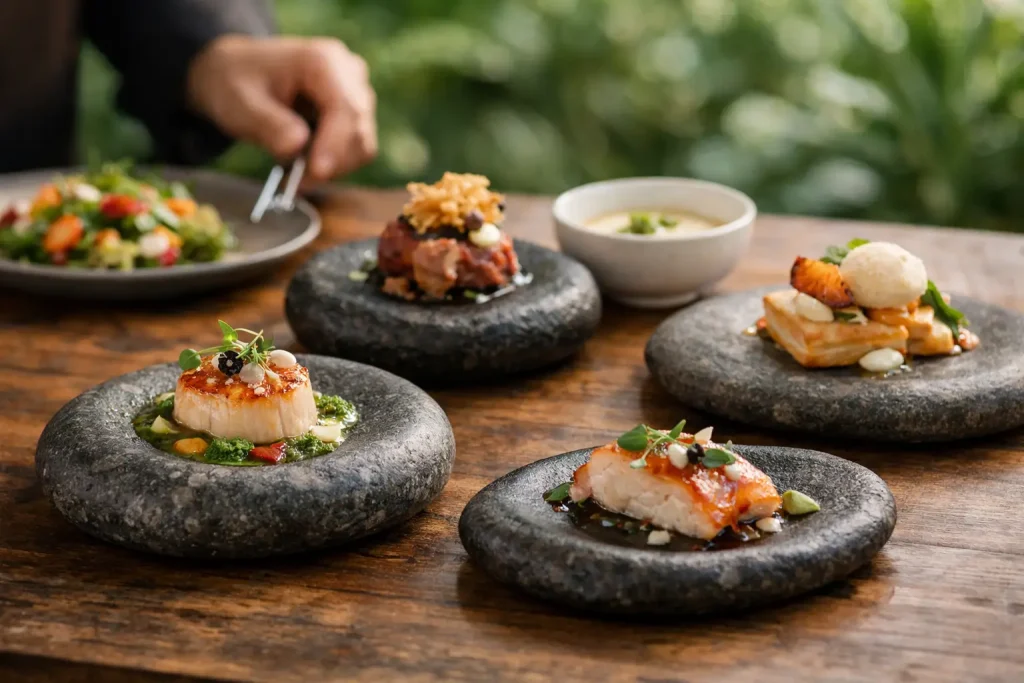
A tasting menu is not simply a long dinner with smaller plates. It is a chef’s point of view served in sequence: an ingredient, memory, region, or season unfolding one course at a time. Understanding how chef tasting menus work helps you arrive ready to enjoy the experience rather than wondering when the entrée will appear.
For diners who love discovery, a tasting menu turns dinner into a conversation between kitchen and table. One course may honor the bright acidity of Peruvian ají, while the next draws comfort from slow-cooked Honduran traditions, the warmth of Mexican chiles, or the graceful restraint of Spanish technique. The purpose is not to rush through many dishes. It is to let each one have its moment.
How Chef Tasting Menus Work From Arrival to Dessert
Most tasting menus are a fixed progression of courses chosen by the chef. Instead of selecting an appetizer, main course, and dessert from a broad menu, guests place their trust in a carefully designed journey. The kitchen controls the order, portion size, temperature, and pacing so flavors can build with intention.
The first bite often serves as an introduction. It may be a delicate canapé, a bright spoonful of citrus-cured seafood, or a crisp element that wakes up the palate. From there, courses can move from light to rich, cool to warm, familiar to unexpected. A thoughtful menu may return to a single ingredient in different forms, such as plantain rendered crisp in one course and deeply caramelized beside a savory preparation later in the meal.
Dessert is not always the only sweet moment. A palate cleanser, fruit course, or subtly sweet savory dish can reset the experience before the final finish. The best tasting menus feel composed, but never predictable.
The Chef Designs a Story, Not Just a Set of Plates
A chef tasting menu is built around relationships. A smoky chile may be paired with a creamy element for contrast. A rich braise may need lime, herbs, or pickled vegetables to bring lift. A familiar dish might be reimagined through finer technique and presentation while preserving the flavor that makes it meaningful.
Seasonality plays a major role. When ingredients are at their best, chefs can make them the center of a course rather than forcing them into a menu after their moment has passed. That is why a tasting menu may change more often than a traditional menu. Availability, local sourcing, and the chef’s creative direction all shape what reaches the table.
At Catrachos Latin Cuisine, that creative freedom can reflect the breadth of Latin America without treating its cuisines as interchangeable. Honduras, Peru, Mexico, Spain, and neighboring culinary traditions each bring distinct ingredients, methods, and histories. A chef-led menu has room to honor those differences while creating a personal, contemporary expression of them.
Why the Portions Are Smaller
A common first impression is that tasting-menu portions look modest. They are meant to. Each course is calibrated to leave room for the next one, allowing guests to experience several textures and flavors without becoming overly full halfway through dinner.
Small does not mean slight. A concentrated sauce, slow-simmered stock, hand-shaped bite, or carefully sourced protein can hold more intensity than a large plate. The courses also add up. By the end of a well-paced menu, most guests feel satisfied rather than stuffed.
That said, tasting menus vary. Some are designed as a lighter culinary experience, while others are generous enough to replace a full multi-course dinner. If you have a larger appetite or are celebrating with a long evening out, it is perfectly appropriate to ask your server about the approximate number of courses and the overall level of richness before reserving.
Pacing Is Part of the Meal
The pauses between courses are intentional. They give the kitchen time to finish each dish at its best, and they give diners time to taste, talk, and settle into the evening. A tasting menu is rarely the right choice for a quick pre-event meal. It is designed for guests who want to linger.
Timing depends on the number of courses, the complexity of the cooking, and the size of the dining room. A shorter menu may take around 90 minutes, while a more elaborate experience can extend well beyond two hours. Courses should arrive with a sense of rhythm, not a stopwatch. If a table needs to finish by a particular time, sharing that with the host or server at the start is helpful.
The service itself is often more descriptive than during a standard meal. Your server may explain the inspiration behind a dish, highlight a seasonal ingredient, or offer guidance on how to enjoy a particular component. Ask questions. Knowing why a sauce was made with roasted pepper instead of fresh, or how a corn preparation connects to a regional tradition, makes the experience more memorable.
Beverage Pairings Are Optional, but Purposeful
Many tasting menus offer pairings selected to complement each course. These may include wine, cocktails, beer, sake, or nonalcoholic drinks. The goal is not simply to pour something alongside every plate. A pairing can soften heat, echo an herbal note, refresh the palate after richness, or create an appealing contrast.
A beverage pairing is optional. Ordering a favorite glass, choosing a nonalcoholic beverage, or enjoying water throughout the meal is equally welcome. If you do choose a pairing, remember that the pours are usually measured for the full menu. Let your server know if you prefer a lighter approach or if one person at the table would like to participate while another does not.
Dietary Needs Should Be Shared Before You Arrive
Because tasting menus are planned in advance and courses may contain many components, early communication matters. Tell the restaurant about allergies, celiac disease, vegetarian preferences, pregnancy-related restrictions, or other dietary needs when making the reservation whenever possible.
A skilled kitchen can often adapt courses, especially with advance notice, but not every substitution is practical or safe. Some preparations depend on a stock, sauce, flour, or garnish that is integral to the dish. Gluten-free options may be available, yet guests with celiac disease should always communicate the seriousness of their needs so the team can discuss cross-contact precautions honestly.
The same consideration applies to dislikes. An aversion to one ingredient is usually easier to accommodate than a broad list of exclusions, but the chef needs enough notice to preserve the balance of the menu. Clear communication gives the kitchen its best chance to create something delicious for you, not merely something you can eat.
What to Know Before Making a Reservation
Tasting menus work best when expectations are shared. Confirm the date, time, party size, price format, and whether the menu is offered for the entire table. Some restaurants require all guests to participate because courses are prepared and paced as one experience. Others offer more flexibility.
Reservations are especially wise for celebrations, weekends, and visits from outside Rapid City. Arrive on time, since late arrival can affect the kitchen’s pacing and the experience of your own table. If plans change, notify the restaurant as soon as you can. Chef-driven dining involves advance preparation, limited ingredients, and a great deal of care before the first plate is served.
Come curious, mention your needs early, and give the meal the time it deserves. The lasting pleasure of a tasting menu is often found in one unexpected bite: a familiar ingredient seen differently, a flavor that recalls home, or a course that invites you to slow down and taste with full attention.